








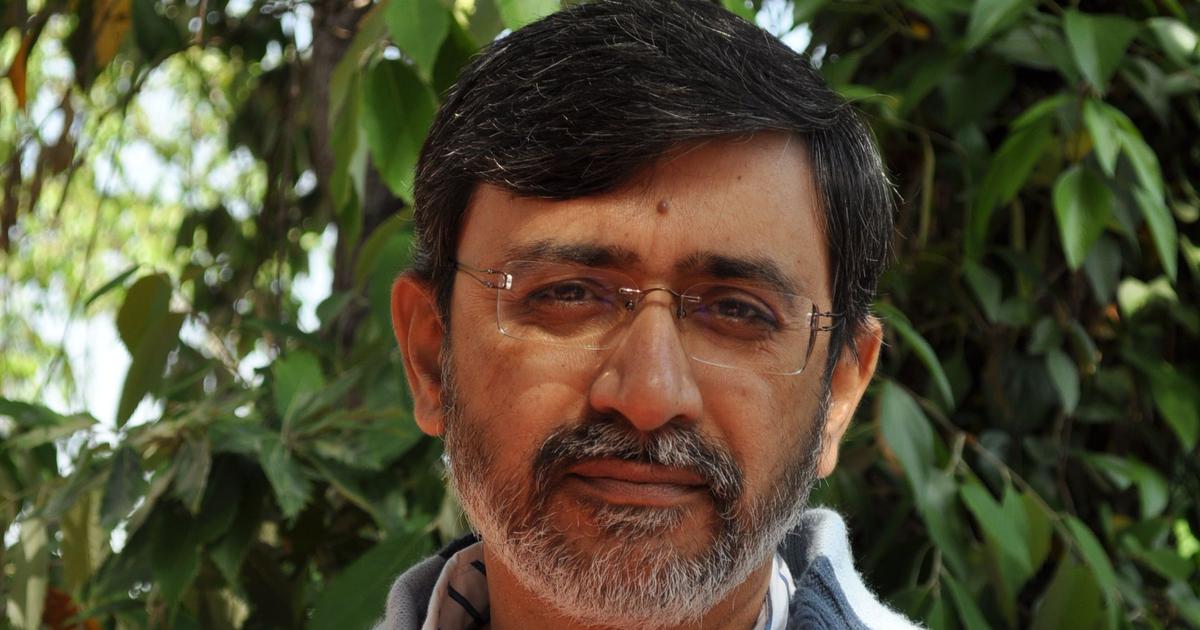
Jorge Luis Borges once remarked that a poet’s foremost responsibility lies in discovering the right metaphors to express their ideas. Metaphors, as he suggested, are not mere decorative elements but foundational to poetry’s power to communicate profound truths. TS Eliot emphasised the importance of the “objective correlative,” the perfect alignment between an emotion or idea and the symbolic representation that evokes it. The poetic practice of Prafull Shiledar exemplifies such poetic principles in remarkable ways. Across the range of themes and motifs explored in Scratching the Silence: Selected Poems, Shiledar demonstrates a masterful ability to find metaphors that feel inevitable and organic to the ideas they convey. Through dense imagery and subtle emotional undertones, he invites the reader into a world where words and ideas are in harmonious union with feeling and emotion.
For Shiledar, language is not merely a tool for communication but the very foundation of human sensibility. In his poem “Taste of Water,” he articulates this beautifully:
The alphabets at the bottom
anchor the flow of language …
The flowing waters of language
bestow a vision so vivid.
He suggests that through language, we gain not only the ability to articulate but also the capacity to envision and empathise. In a fragmented world, this “flowing water of language” becomes a unifying force, anchoring us to shared experiences and emotions.
The abstract and the tangible
Metaphors, in Shiledar’s poetry, serve as bridges that connect disparate ideas and realms of experience. They allow him to traverse the boundaries between the abstract and the tangible. The poet anchors his metaphors in the material world of human beings and also in the materials they are surrounded by. For instance, when he compares language to water, he captures its duality: its ability to nurture and erode, to reveal and conceal.
Through his metaphors, Shiledar explores themes of interdependence and interconnectedness. Each image or symbol he employs reflects a broader truth about the world’s shared essence. Whether it is the fluidity of water, the rootedness of a tree, or the resilience of an ant, his metaphors resonate with an authenticity that transcends cultural and temporal boundaries.
Shiledar’s critique of the darker aspects of humanity is unflinching. In “The Skin Can’t Cover Everything,” he reveals the inherent duality within us:
But it can’t cover
the wild animals
hidden within us,
waiting to commit crimes.
He does not shy away from acknowledging the “wild animals” within, and through his poetry, he challenges readers to confront and transcend these impulses. His work acts as a mirror, reflecting both the potential for harm and the need for self-awareness and transformation.
His poetry is deeply attuned to the turbulence of contemporary life. In “Poet in Riot,” he dramatises this turmoil as a conflict between the hunter and the hunted, turning societal disaffection into a poignant commentary. His poems often reflect on the myriad ways human bonds are fractured, exploring themes of alienation, fear, and resilience. In “The Silent Killer,” Shiledar critiques the emotional desensitisation of modern society. What his poems repeatedly confront is the condition of human beings who are “immunised against humanity.” This phrase captures the chilling reality of emotional apathy and moral disconnection.
This collection includes numerous meta-poems that reflect on poetry itself. He acknowledges a dual crisis: external, as poetry struggles to find its place in an increasingly chaotic world, and internal, as it grapples with its own forms and genres. In his lines,
Poetry no longer desires
a rock-solid form.
It roams lightly across the globe, like the wind
Humanity, a work in progress
Shiledar envisions poetry as a fluid, dynamic force: adaptable and untethered, capable of transcending boundaries and resonating universally. This fluidity allows poetry to remain relevant, serving as both a critique of the present and a beacon of hope. In his reflections on books, the poet emphasises the transformative power of literature:
(Books) lend vision to eyes,
tune to voices,
and freedom of movement
to shackled hands and feet.
These lines highlight the liberating force of the written word, which nourishes the human spirit and fosters a deeper sense of connection and understanding.
Shiledar’s poetry is both a search for meaning and an argument for a better way of living. It seeks an idiom capable of capturing the angst and anxieties of contemporary life while simultaneously advocating for inclusivity and solidarity across all living and non-living inhabitants of the world. His work echoes Bruno Latour’s observation that society is not a static entity but a project to be continuously assembled. His poems envision a world where humanity is not defined by its domination over the rest but by camaraderie and mutual respect; an inclusive vision that is encapsulated in the words of Kannada novelist Yashwant Chittal: “We are not born as human beings; we are born to become human beings.” Shiledar’s poetry reflects this philosophy, presenting humanity as a work in progress; a journey toward greater empathy, understanding, and unity.
The poems in this collection stand as a testament to the enduring relevance of art in addressing the complexities of modern life. Through his masterful use of the poetic form, incisive critique of violence and apathy, and unwavering belief in the transformative power of poetry, Prafull Shiledar offers readers both solace and a call to action. His work reminds us that amidst the chaos, poetry can anchor us to our shared humanity, inspiring us to strive for a world where we live not against, but with and for, one another.
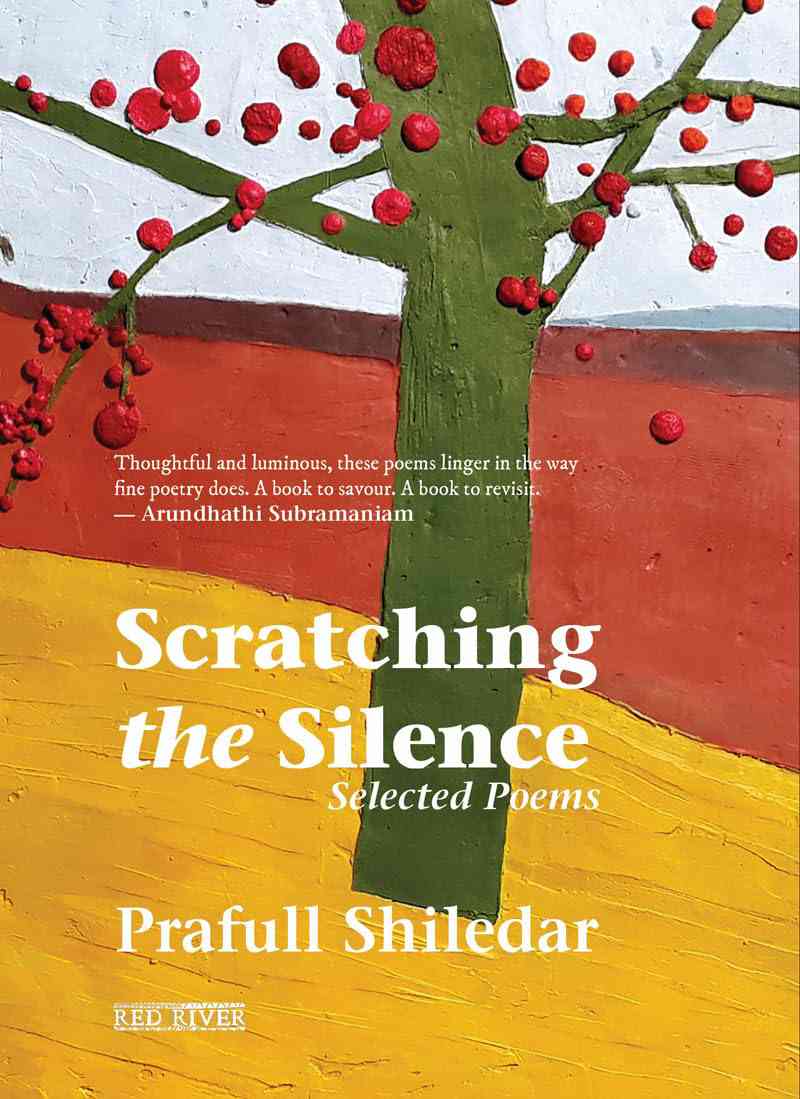
Scratching the Silence: Selected Poems, Prafull Shiledar, translated from the Marathi by Santosh Bhoomkar, Vishnu Khare, Maya Pandit, and Dilip Chavan, Red River Press.
